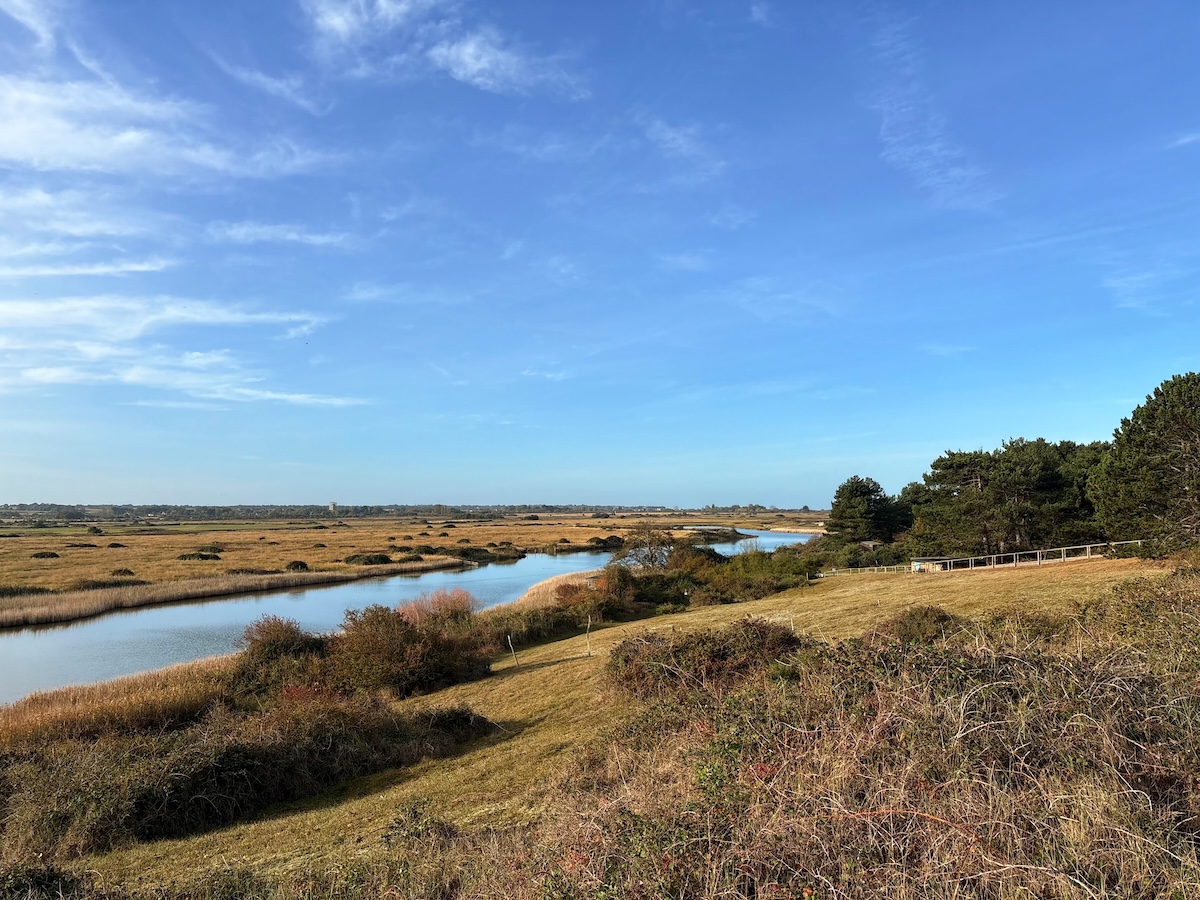
Holme Bird Observatory reserve is designated as a Site of Special Scientific Interest (SSSI). Owing to its key location on the Norfolk coast, birds travelling from east to west on migration are often grounded by the change in the line of the coast, which drops away to the southwest and into the Wash. This local geography causes the pines and dune scrub at Holme to stick out into the North Sea, focusing birds on this apex. Holme Bird Observatory enjoys the close proximity of several different habitats; the sea, beach, dunes, pine woods, scrub, salt and fresh marsh all contribute to an incredibly varied wilderness. The site itself consists of 10 acres in total, and the habitats are full of important sources of food for migrating birds, together with drinking pools and sheltered scrub where birds can feed, bathe, and rest.
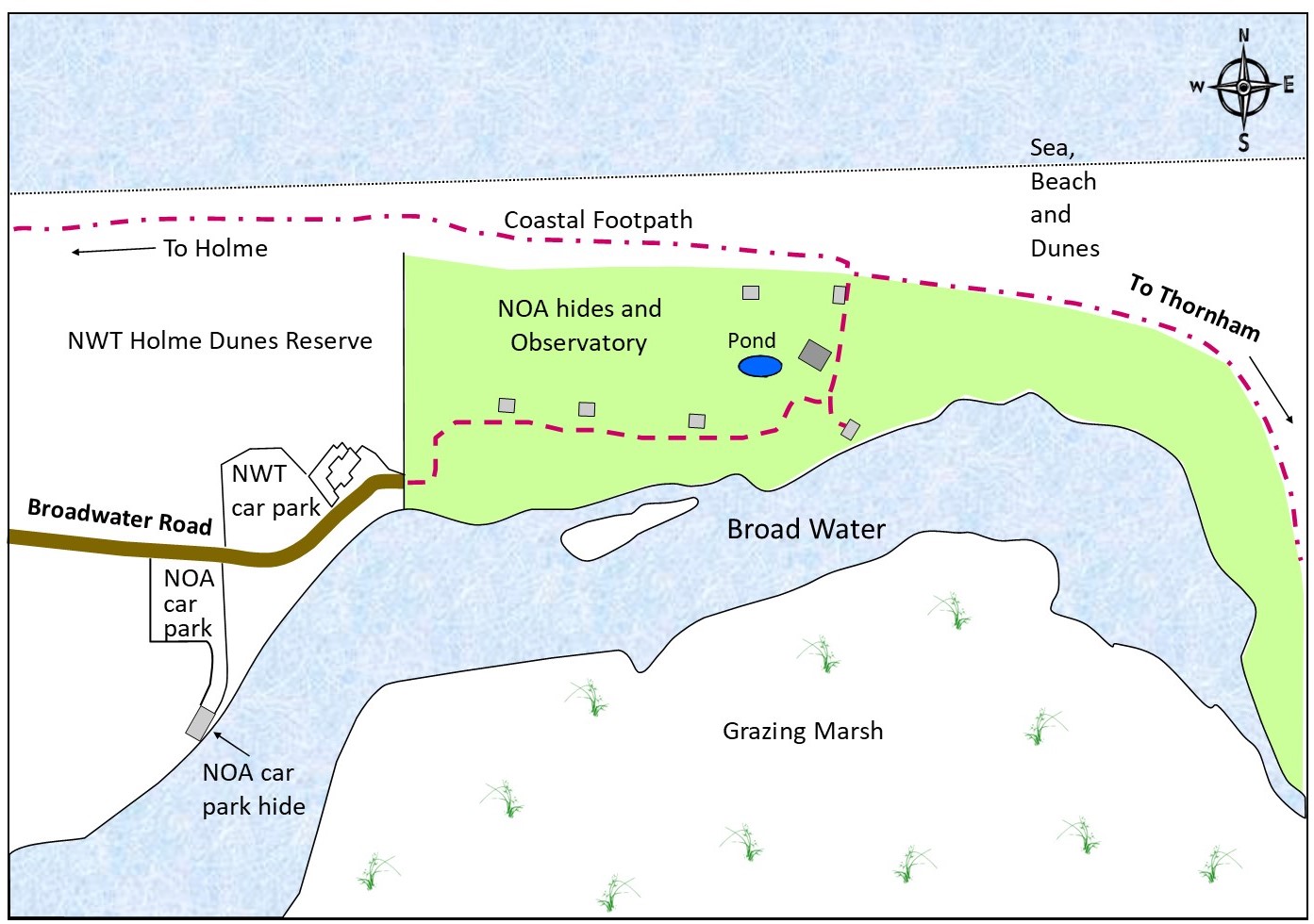
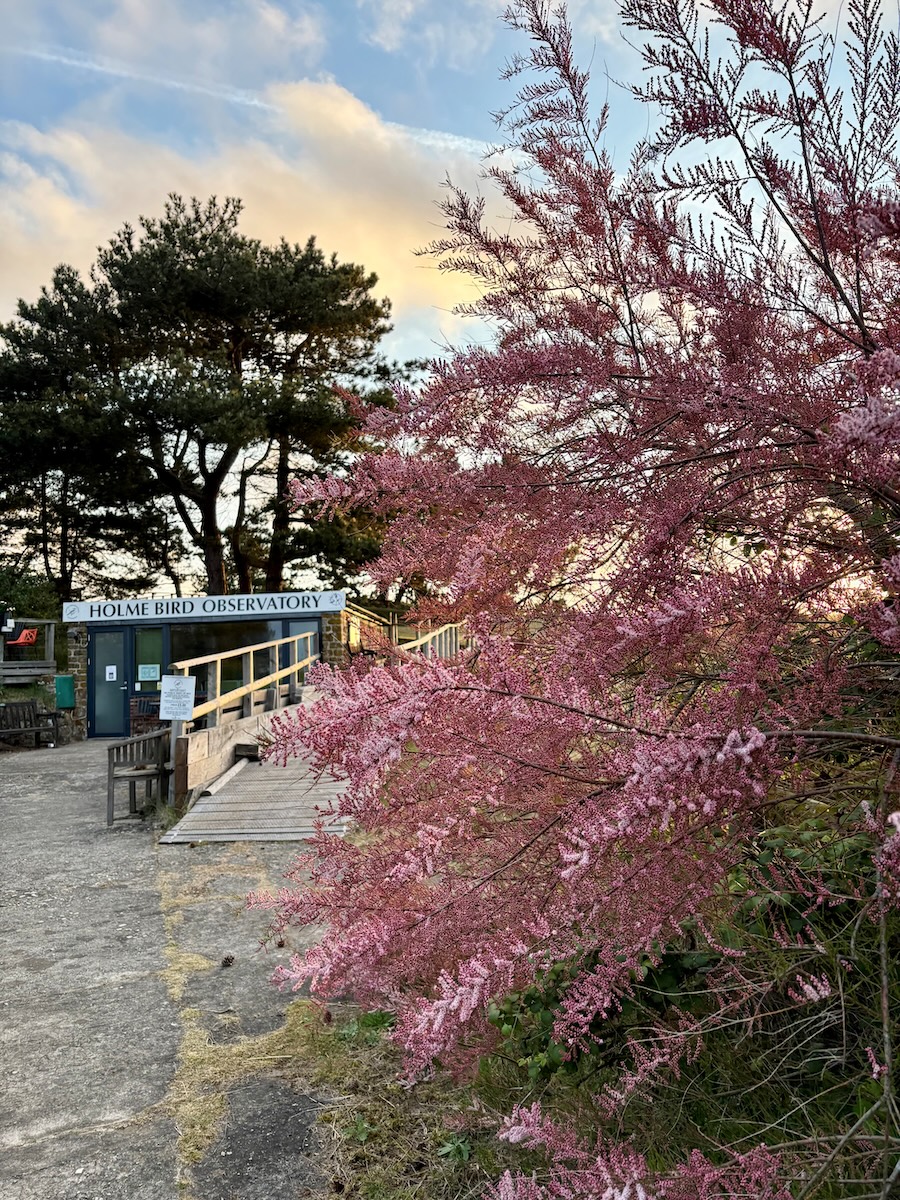
Ringing takes place when weather conditions permit, and a ringing laboratory where visitors can see ringing on suitable days is found just behind the Observatory centre. A purpose built seawatching hide stands high in the pine trees looking north west over the dunes out to sea. There are six other hides; a shelter near the coastal footpath at the northern boundary, one looking over the Broadwater a short distance along the east bank, three viewing hides along the main bank west of the visitors’ centre, and finally a members’ hide in the NOA Car Park, which gives a good view of birds at the west end of the Broadwater.
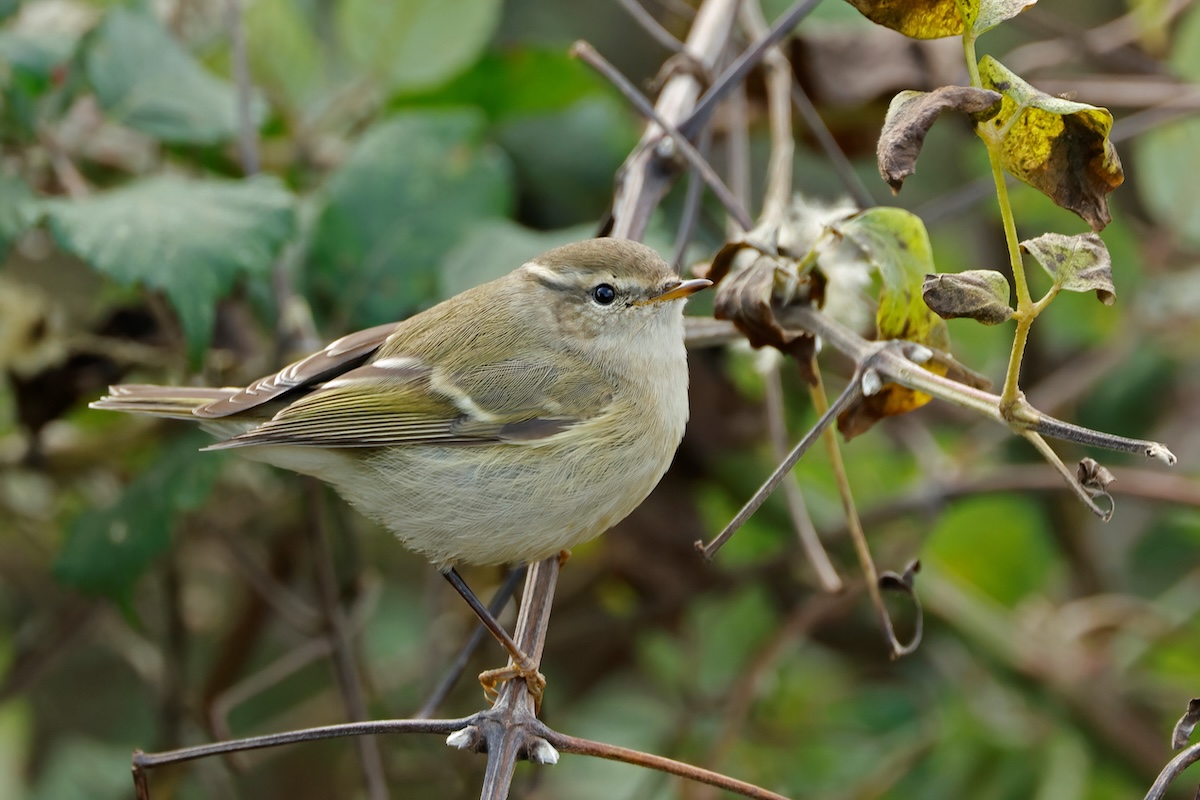
Over 300 species have been recorded at this renowned site, and more exciting visitors have included Caspian Tern, Black Kite, Red-rumped Swallow, Alpine Accentor, Bluethroat and Red-flanked Bluetail. In the autumn in particular rare migrants such as Barred, Yellow-browed, Pallas’ and Dusky Warblers can be found here. In its sixty years to date Holme Bird Observatory has ringed over 80,000 birds and recorded some amazing journeys to and from far flung sites such as Israel, Nigeria and Siberia.
The Observatory also studies butterflies, moths and dragonflies, mammals, reptiles and amphibians and is home to a number of rare plants.
Access Information
As we are a very small team and the nature of our work involves us being out on site, recording birds in the recording area or out ringing, sometimes very early, there may not always be somebody at the Observatory building when you visit. If you wish to buy a day permit (£5.00 per person), you can do this by donating on the website and the money goes towards supporting the work we do and also maintaining our infrastructure. If you need to speak to someone, then please email us or visit during our drop in times on Wednesdays 10-11 and Sundays 11-12.
Access for members is between dawn and dusk, and for permit holders between 10:00 and 17:00.
The site is accessible both by car from Holme village along Broadwater Road, and on foot from the Norfolk Coast Path between Holme and Thornham villages.
Disabled parking spaces are available in the NOA staff car park, which lies beyond the NWT visitors’ centre to the east. Access to the Observatory centre and viewing platform is provided by access ramps at the west and east end of the main bank, and a ramp up to the viewing platform beside the Observatory building.
Wheelchair access is also provided in the Car Park and Dell Hides, which are adapted for wheelchair use. The Car Park Hide can be accessed from the main NOA Car Park.
Cycling: is permitted on Broadwater Road only; please do not cycle on the reserve or the coastal footpath, as this is prohibited.
Dogs are welcome on leads.