Hempton Marsh
Hempton Marsh Nature Reserve consists of 29 acres (12 ha) of ancient wet meadow and mature woodland, situated on the south-western outskirts of Fakenham, and bordered on the south side by the River Wensum. It is home to a variety of rare wetland plants including Southern Marsh Orchid and Yellow Rattle, and is attractive to many birds and insects.
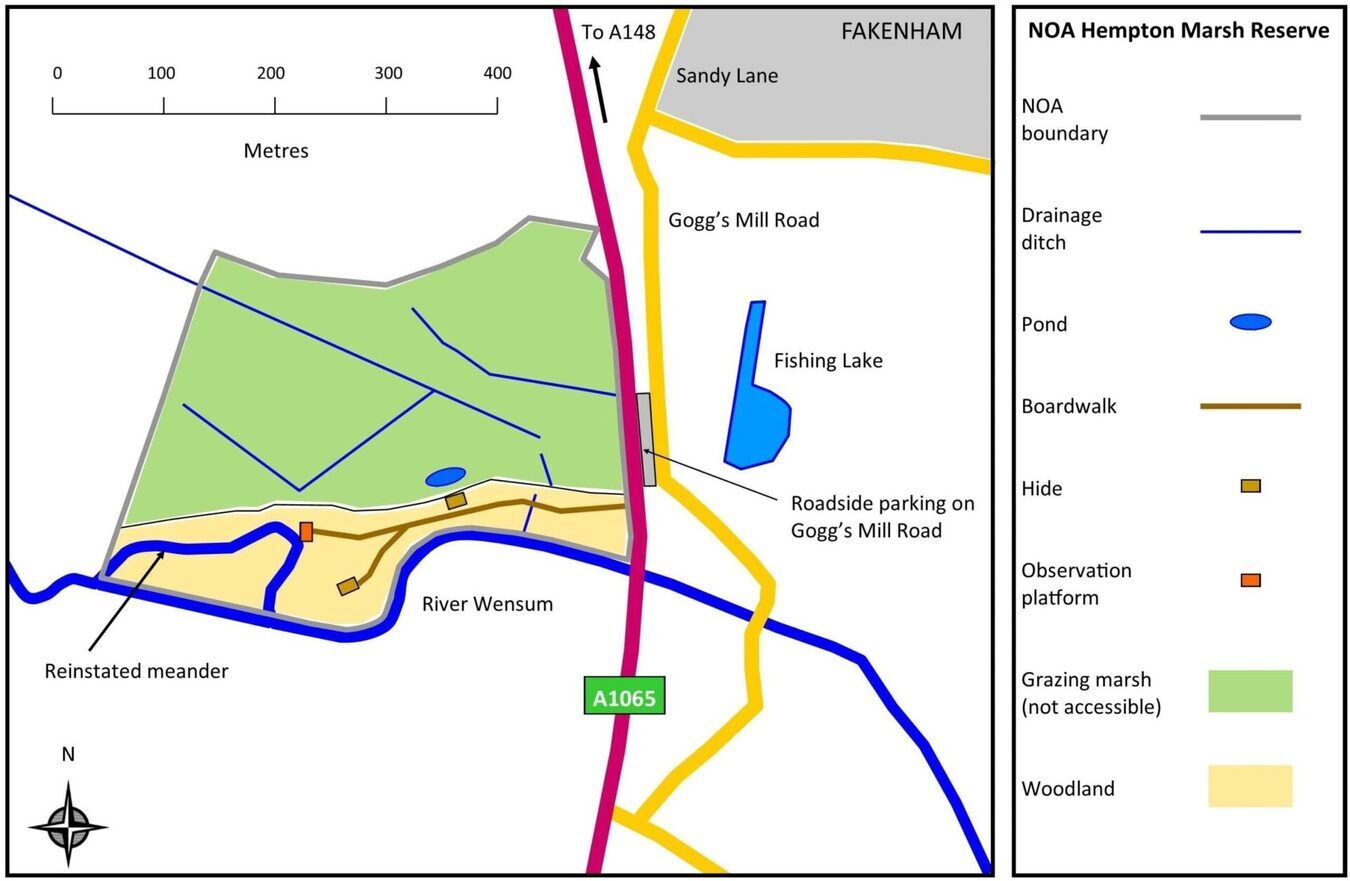
Hempton Marsh is part of a natural flood plain and the marsh is cattle grazed between April and November. A boardwalk running through mature alder carr and scrub looks out onto the grazing marsh, with a members’ hide (called the Marshland Hide) looking north. The boardwalk then winds on through to a woodland clearing with bird feeders and another hide (the Woodland Hide) where visitors can observe birds at the feeders. A second branch of the boardwalk leads to an old river meander, reinstated in 2002, which lies in the south western corner of the marsh.
Birds and other Wildlife
Marsh Harriers, Buzzards and Red Kites regularly soar over the reserve in spring, and Barn Owls can be seen hunting over the wet meadow. Many warblers call the reserve home for spring and summer including Blackcap, Chiffchaff, Willow Warbler, Reed Warbler and Sedge Warbler. Between April and June Cuckoos are frequently heard. Kingfishers often zip up and down the river and Water Rail can be heard. Great White Egrets, Little Egrets and Herons can be found in the main channel.
In winter Redwings and Fieldfares enjoy the many berries on offer. The large alder trees attract finches such as Redpoll, Siskin, Goldfinch and Brambling, and these birds together with Marsh Tit and Great Spotted Woodpecker, sometimes come down to the feeders at the Woodland Hide. In winter the wet meadow floods becoming a feeding and roosting site for waders like Snipe, Woodcock and occasionally Jack Snipe. This flooded area is also good for gulls and ducks.
With the use of trail cameras around the reserve we discovered Otters are frequent visitors using the many waterways. Other mammals include Roe Deer, Water Vole, Water Shrew and Stoat. The marsh is an important site for flowers with good numbers of Southern Marsh Orchids and Yellow Rattle, and a wide range of other species which favour wet grassland. The site also supports a wide range of invertebrates including butterflies, moths, dragonflies and damselflies. While there is no public access onto the meadow, these species can be seen and enjoyed from the hides and boardwalk.
Reserve History:
The reserve was purchased in 1999 through a Heritage Lottery Grant. Since then the NOA has focussed its efforts on the development of the habitat at the site, including restoration of an ancient meander in the river. In addition, there has been systematic monitoring of the wildlife here. Further funding from the Heritage Lottery Fund in 2006 permitted the NOA’s ‘Access to wildlife at Hempton Marsh’ project, supplemented by matched funding from Jordans’ Cereals. This project allowed the construction of a boardwalk and hides to give effective public access to the site without damage or disturbance to the habitat. The reserve was officially opened in April 2008, and public events have been run at the reserve including moth days and ringing demonstrations. The NOA’s work to protect and develop the habitat of the site attracts Higher Level Stewardship funding.
Access Information
There is currently no public access to the reserve due to the poor and unsafe condition of the boardwalk, though the reserve is still protected and managed for wildlife.
Grid reference: TF 913296.