Holme Bird Observatory
for as little as 14p per day.
2nd October 2026
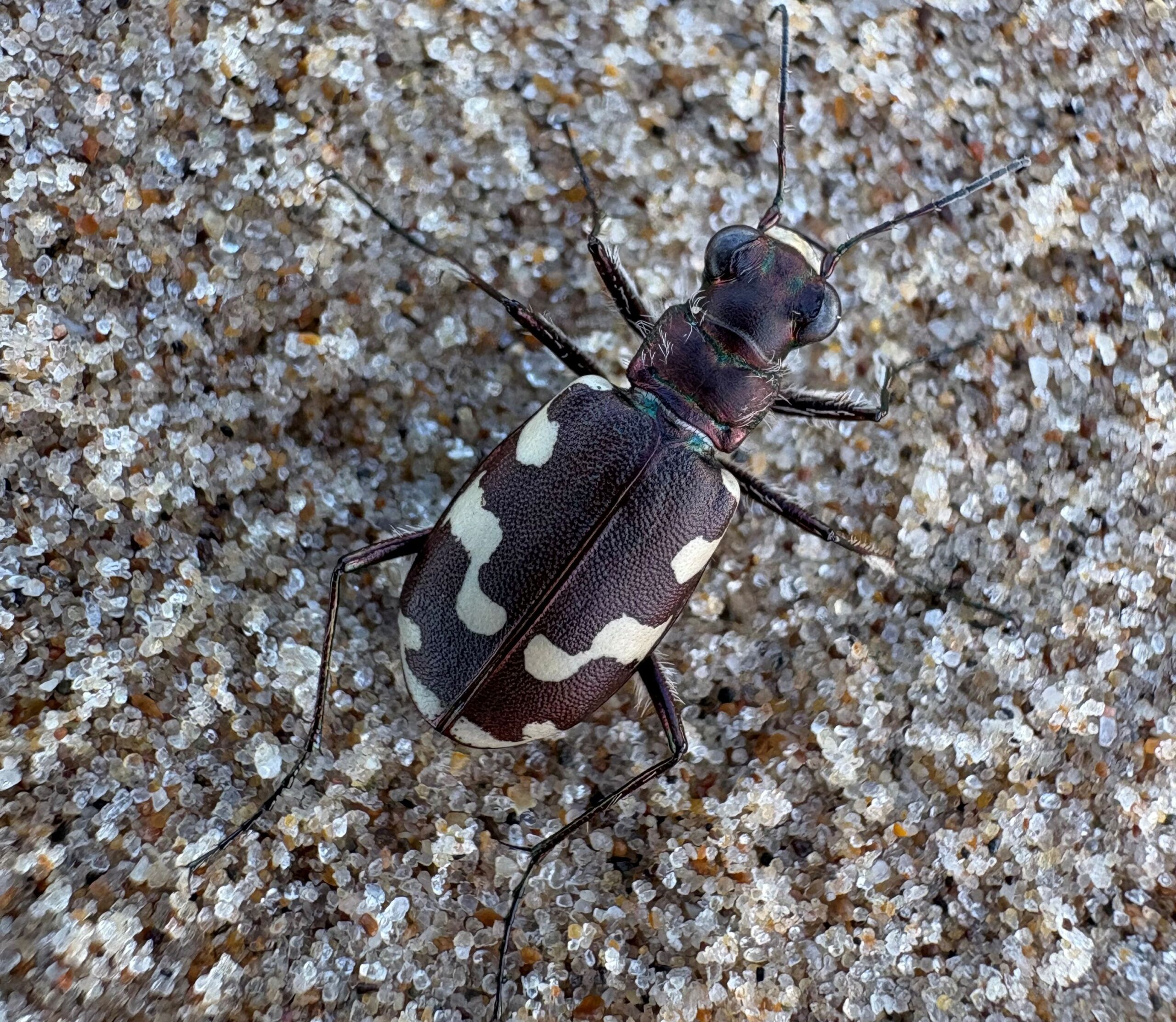
Dune Tiger Beetle – Shannon Clifford
With it too windy for ringing and little prospect of the south-westerlies producing any migrants on the deck, we decided to head out to the eastern end of the beach, to enjoy the Lapland Buntings and see what the rising tide bought in. We hunkered down on the dune ridge and waited, during which time 4 Snow Bunting flew west…. Eventually we were getting amazing views of the birds, with 530 Oystercatcher and 118 Ringed Plover in the wader roost alongside smaller numbers of Knot, Sanderling, Bar-tailed Godwit, Grey Plover and Turnstone. To our surprise, as we watched birds rummaging through the wrack-line, not one but two Little Stint appeared round the corner. It wasn’t long before the two Lapland Bunting were pushed off the saltmarsh by the tide and started feeding on the shingle spit, but they were never settled for long and hard to keep track of. They were loosely associating with 55 Linnets, 5 Reed Buntings, 2 Rock Pipits and a handful of Meadow Pipits. This was by far the best way to view them, and allowed the birds (waders and all) to carry on foraging naturally. A scope is required though.
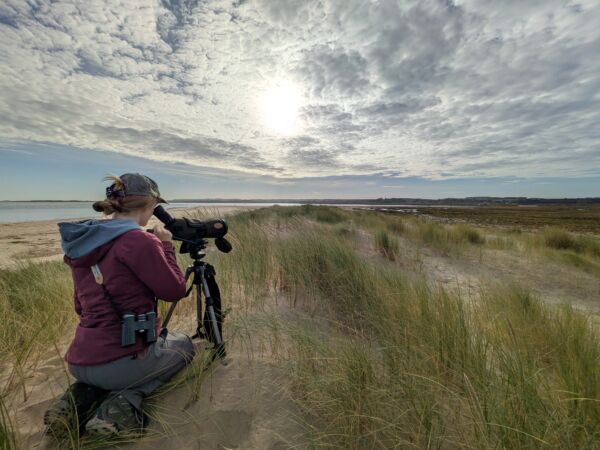
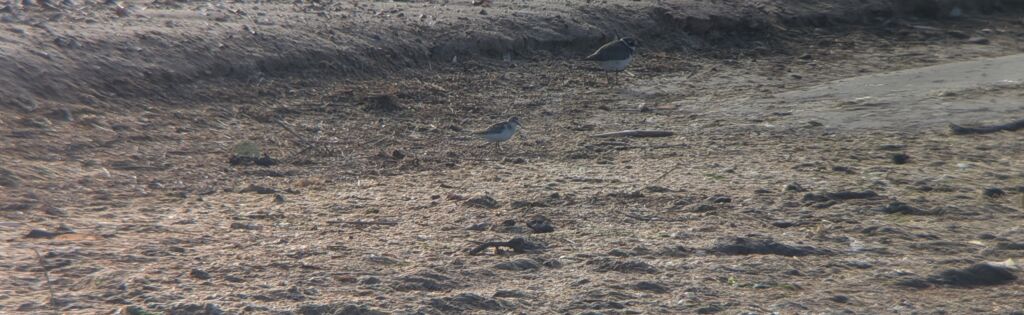
Scanning for birds in the dunes, and Little Stint on the wrack-line – photos by Ed Tooth
Back along the beach, a single Snow Bunting was, as Snow Buntings do best, showing very well. We also got slightly distracted by a non-ornithological creature, a Dune Tiger Beetle, a nationally rare species found in coastal dune systems and sandy areas in England and Wales. It’s not an easy thing to find, so we felt very lucky to spot this one scuttling across the sand as we walked along the beach.
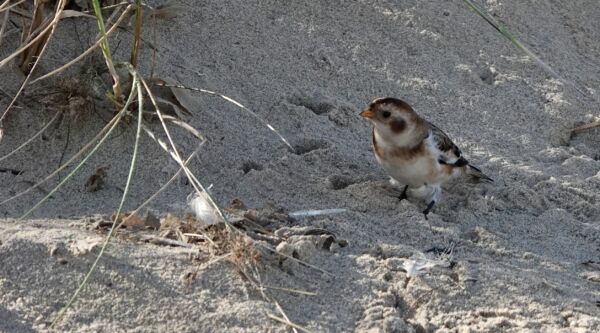
Snow Bunting with particularly fluffy trousers – photo by Shannon
We decided to have a look at the sea during the falling tide, and there was a decent movement of auks west. Most were too distant to identify, but of the 314 that we saw logged, 33 close enough to identify as Razorbill, with no confirmed Guillemot sightings. The best of the rest included a nice drake Eider, 7 Red-breasted Merganser and 4 Arctic Skua, one of which came right over the beach chasing a Sandwich Tern.
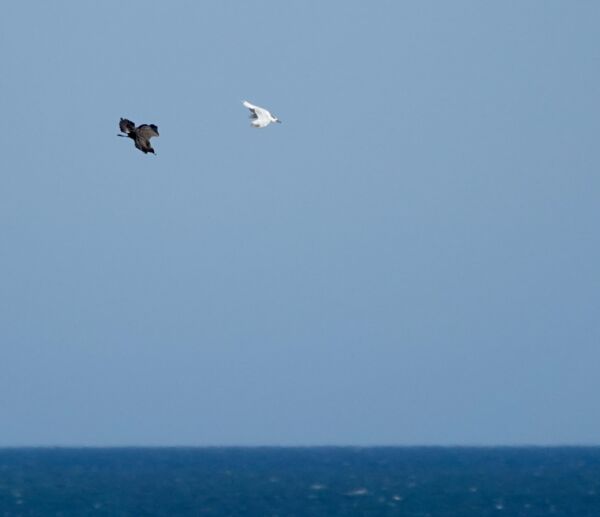
Skua vs tern! photo by Shannon
As predicted, passerines were extremely thin on the ground, with the only bird of note a single Yellow-browed Warbler, presumably yesterdays bird, heard briefly in the pines around Dell hide.
All was quiet in the moth traps too, with species largely as they have been recently, dominated by Lunar Underwing (32) and Narrow-winged Grey (9). The highlight today was a rather nice Vestal adding a splash of colour to proceedings.
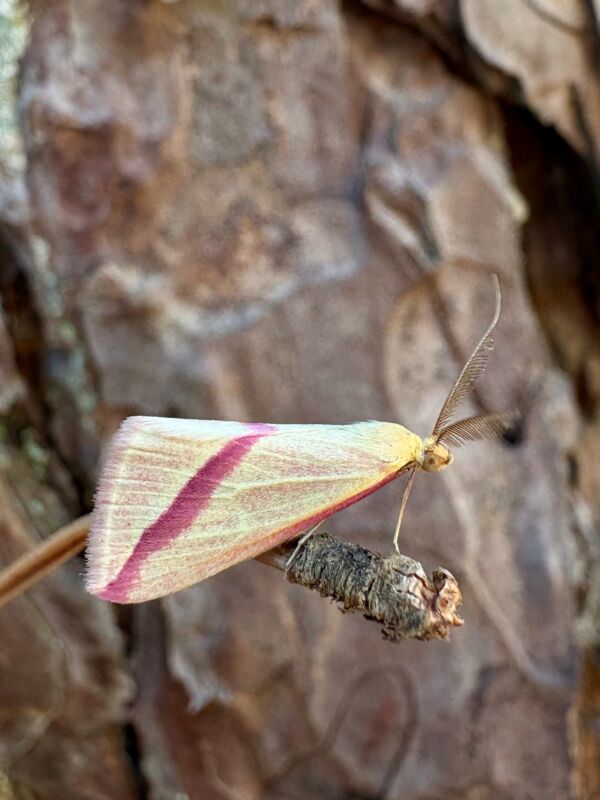
Vestal – photo by Shannon
Shannon